Introduction
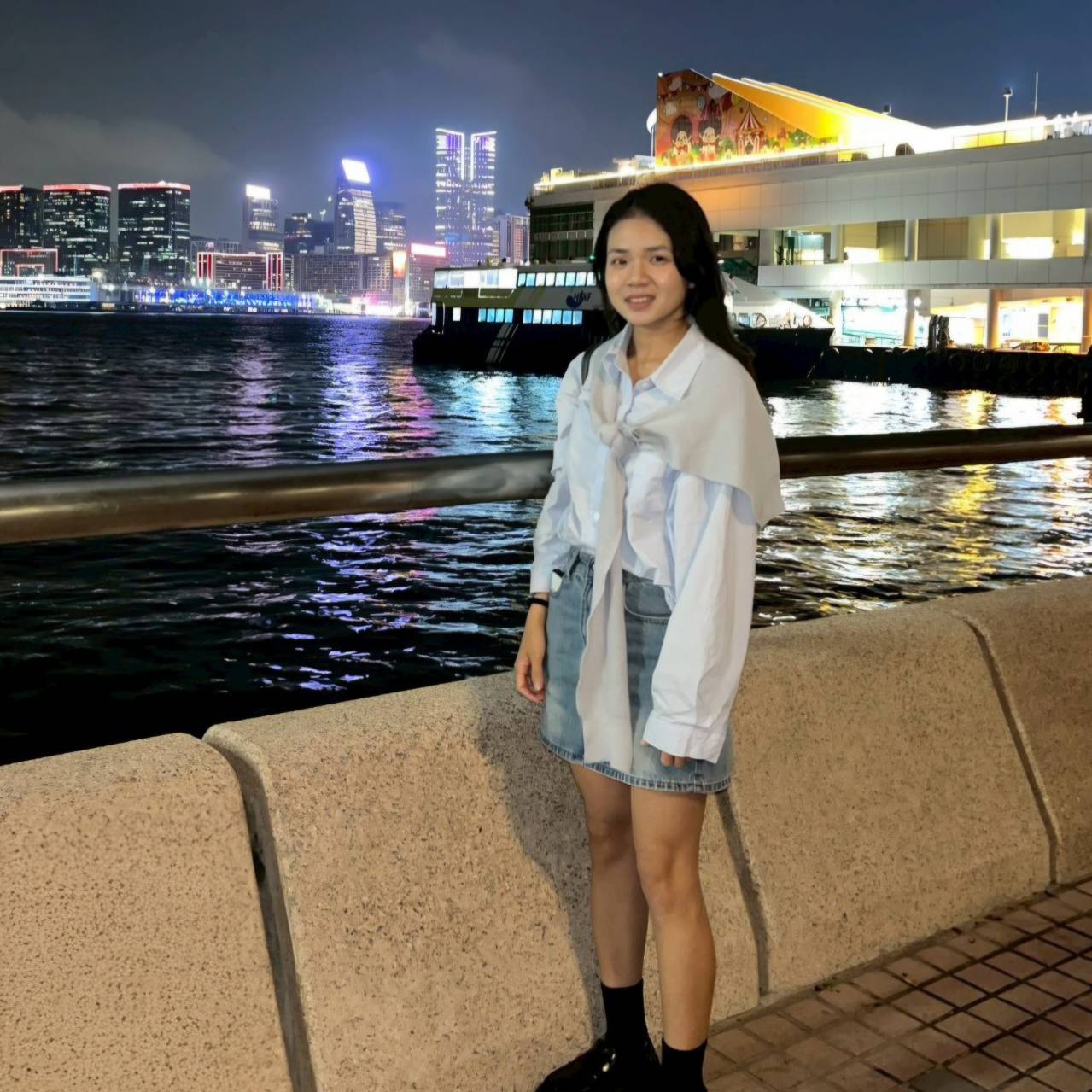
Hello! I'm Wei-Hsuan Chung, a third-year undergraduate researcher at National Taiwan University, where I am pursuing a B.S. in Physics with a double major in Sociology.
I am passionate about understanding the (often counter-intuitive) dynamics of the quantum world. My academic journey is driven by a curiosity to find the fundamental principles that govern how quantum information flows, interacts with its environment, and gives rise to complex, non-equilibrium phenomena.
My research, conducted primarily at Academia Sinica, bridges the gap between rigorous theoretical modeling and high-performance computational simulation.
My theoretical work in Dr. H.H. Jen's group focuses on open quantum systems, particularly waveguide QED. This research has led to a co-authored paper submitted to Physical Review A (arXiv:2510.27310) , where we analyzed Liouvillian spectra and excitation dynamics. I am currently expanding this focus to include topics like the Quantum Mpemba Effect and Quantum Error Correction.
I complement this theory with hands-on computational skills. In Dr. Kiwing To's group, I use LAMMPS to simulate complex granular systems, and my aptitude for data analysis was recognized with a Merit Award in the 2024 Promenade of Data Science.
People often ask, "Why Physics and Sociology?" I believe this dual perspective is my greatest strength. My physics training provides the rigorous quantitative tools to model complex systems, while my sociology major trains me to analyze the underlying structures, interactions, and emergent behaviors that define those systems whether they are quantum or human. This unique combination allows me to approach problems as a "systems-level thinker."
My long-term goal is to pursue a Ph.D. in quantum theory, a dream that began long before university. I still remember being captivated by the movie "Hidden Figures" in elementary school; to me, those female leads were the coolest stars in the world.
That film sparked my initial interest, but my core motivation was truly defined during a lecture by Professor Hong-Yi Pu (卜宏毅) in Wu Chien Shiung Science Camp, in the summer before I entered NTU. He posed a series of profound questions to the audience: "What would it take for you to feel satisfied? Winning on Physics Olympiad? Finishing your physics degree? Getting an academic job?"
His point was that liking physics doesn't mean there is only one path. Even if you were a great problem-solver in high school, it doesn't mean you must pursue academia. He urged us to ask ourselves: "When is it enough?" He suggested that the moment you feel it's "enough" is probably the moment that, if you were forced to continue, your love for the subject would acquire a negative slope.
That lecture has become my guiding principle. It taught me to protect my passion by constantly checking that "slope." What I've found so far is the exact opposite of a negative slope. My research on open quantum systems has only deepened my fascination with the quantum world. My project on QEC didn't satisfy my curiosity; it just opened up a new world I need to explore further. Each new topic I study leads to more questions, more connections, and a stronger desire to understand the underlying principles.
For me, the slope is still strongly positive. I am pursuing a Ph.D. not because it's the "only path," but because my desire to "know more" is far from satisfied.
To take the next step on this journey, I am actively seeking a challenging summer 2026 research internship. If you are a faculty member or researcher with a potential project, I would be thrilled to discuss my qualifications and how I could contribute to your group. Please feel free to get in touch or explore my detailed research projects.